How We Photograph a Beach Town Listing vs an In-Town Home
Elijah Allison · · 7 min read
Photographing a beach town listing and photographing an in-town home are two different jobs, even when the houses are the same size and the same age. In Crystal Beach, Port Dalhousie or Grimsby Beach, buyers are shopping for a setting first and a house second. On a typical subdivision street in Welland or Fonthill, they're comparing layouts, finishes and yards against three other homes a few doors away. So we change how we plan the shoot, what time of day we shoot it, where the drone goes and which lifestyle frames make the final set. Here's how the two compare, side by side.
Key takeaways
- A beach town listing sells the location first, so the shot list starts with the water, the sand and the walk to get there.
- An in-town listing competes with similar homes nearby, so the shot list starts with the rooms and upgrades that set it apart.
- Lake orientation changes timing: Lake Erie homes in Crystal Beach face south toward the water, while Lake Ontario homes usually have the water side to the north.
- Drone on a beach listing shows distance to the shore, while drone in town shows the lot and what surrounds it.
- A measured floor plan helps both, and it's close to essential for older beach cottages with added-on rooms.
What is a beach town buyer really shopping for?
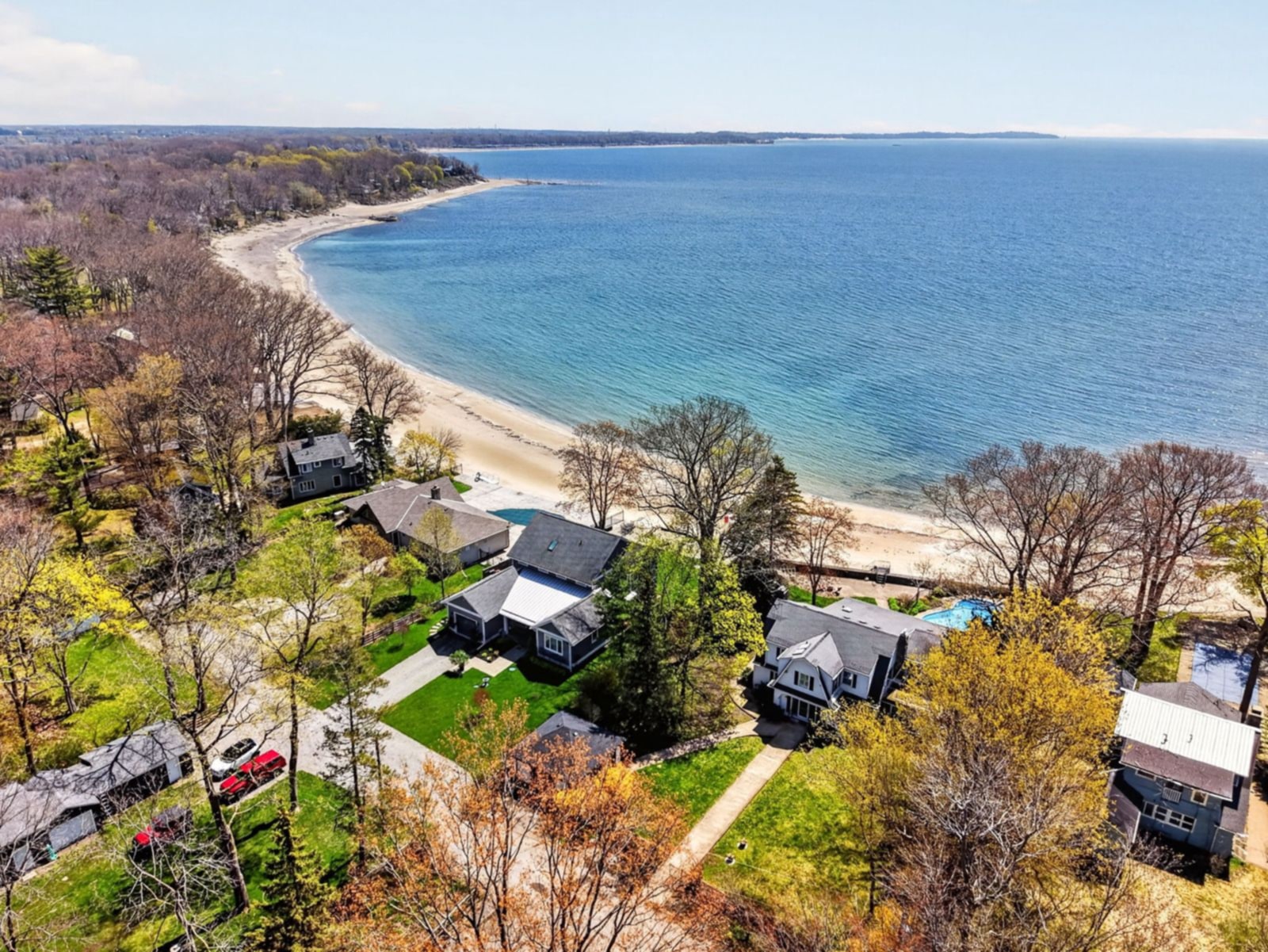
A beach town buyer usually picks the area before they pick the house. They want to be near the sand, the pier or the marina, and the first thing they want to know is how close the house is to all of it. The home matters, but the setting is the reason the listing gets a second look.
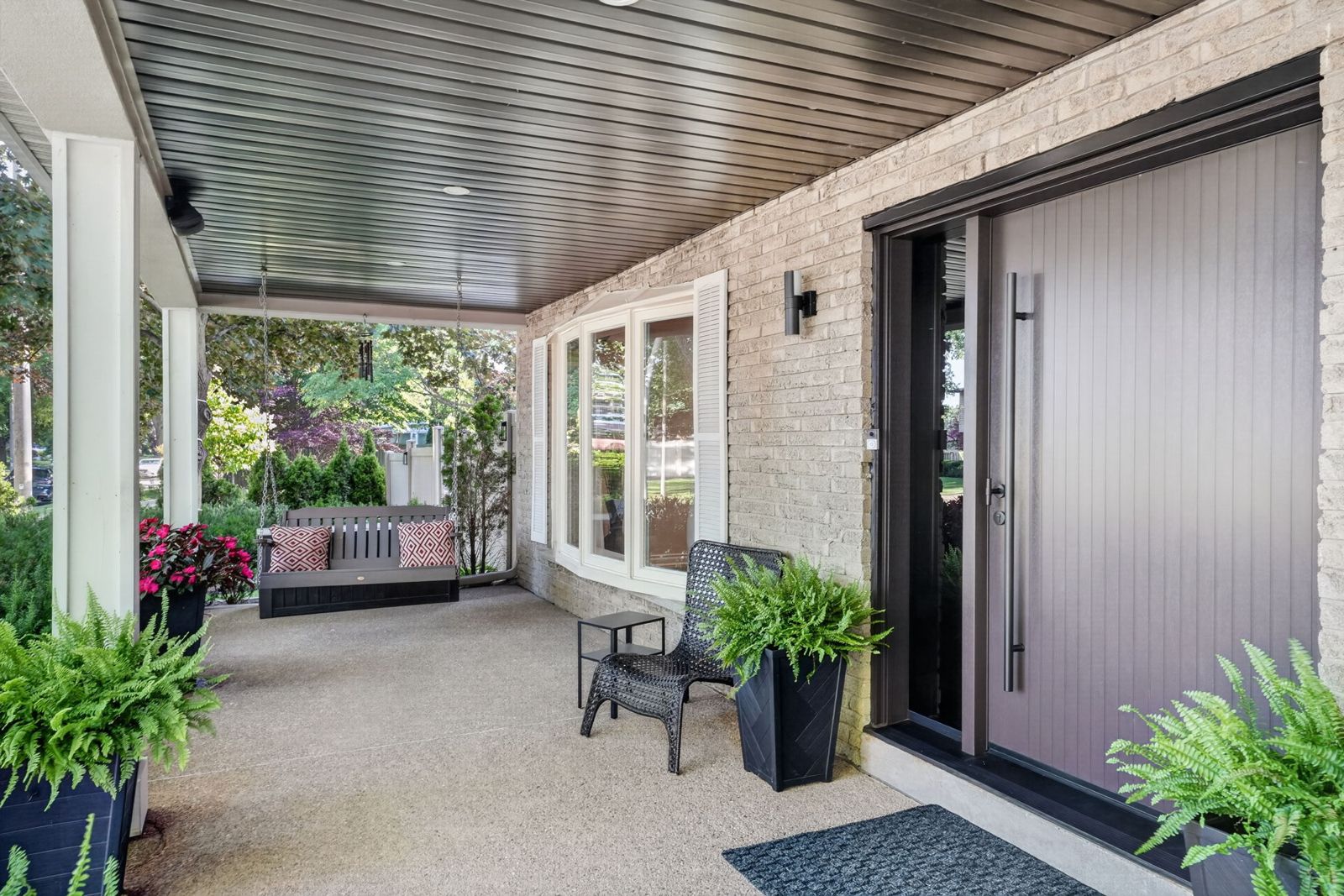
An in-town buyer is usually comparing. They might be looking at four homes within a few streets of each other, built around the same time, with nearly the same floor plan. They want to know which one has the better kitchen, the deeper yard, the finished basement or the quieter crescent. The photos have to make this home stand out from its neighbours, and that's a very different brief.
So for a beach listing, our shot list starts outside and with the location. For an in-town listing, it starts with the rooms and the details that set the home apart.
How does lake orientation change the timing of the shoot?
This is the part most people don't think about until the photos come back flat. In Crystal Beach, Lake Erie is to the south, so the lake side of a waterfront home gets good light through most of the day. Bay Beach and the sand along the shore are bright and reflective, which helps the aerials but can push interiors toward a hazy, overexposed look if we're not careful with window blending.
On Lake Ontario it flips. In Port Dalhousie and along Grimsby Beach, the water is to the north, so the lake side of the house can sit in shade for much of the day while the street side is lit. In summer, the sun sets far enough to the northwest that late evening light can wrap onto those lake-facing walls, which is often the best time for the water-side exteriors. We check orientation for every waterfront booking so we can time the exteriors for the side buyers care about most.
Water also changes the whole mood of a scene. A calm, clear day turns the lake blue and makes everything feel open. Wind and haze flatten it to grey. We'd rather nudge a beach shoot by an hour than photograph a dull lake.
In town, the light problems are usually mature trees and the house next door throwing shade across the front. We pick the time of day that gives the facade clean light. If that never happens because of a big maple, a dusk exterior is often the better hero shot.
Where should the drone go on a beach listing vs an in-town home?
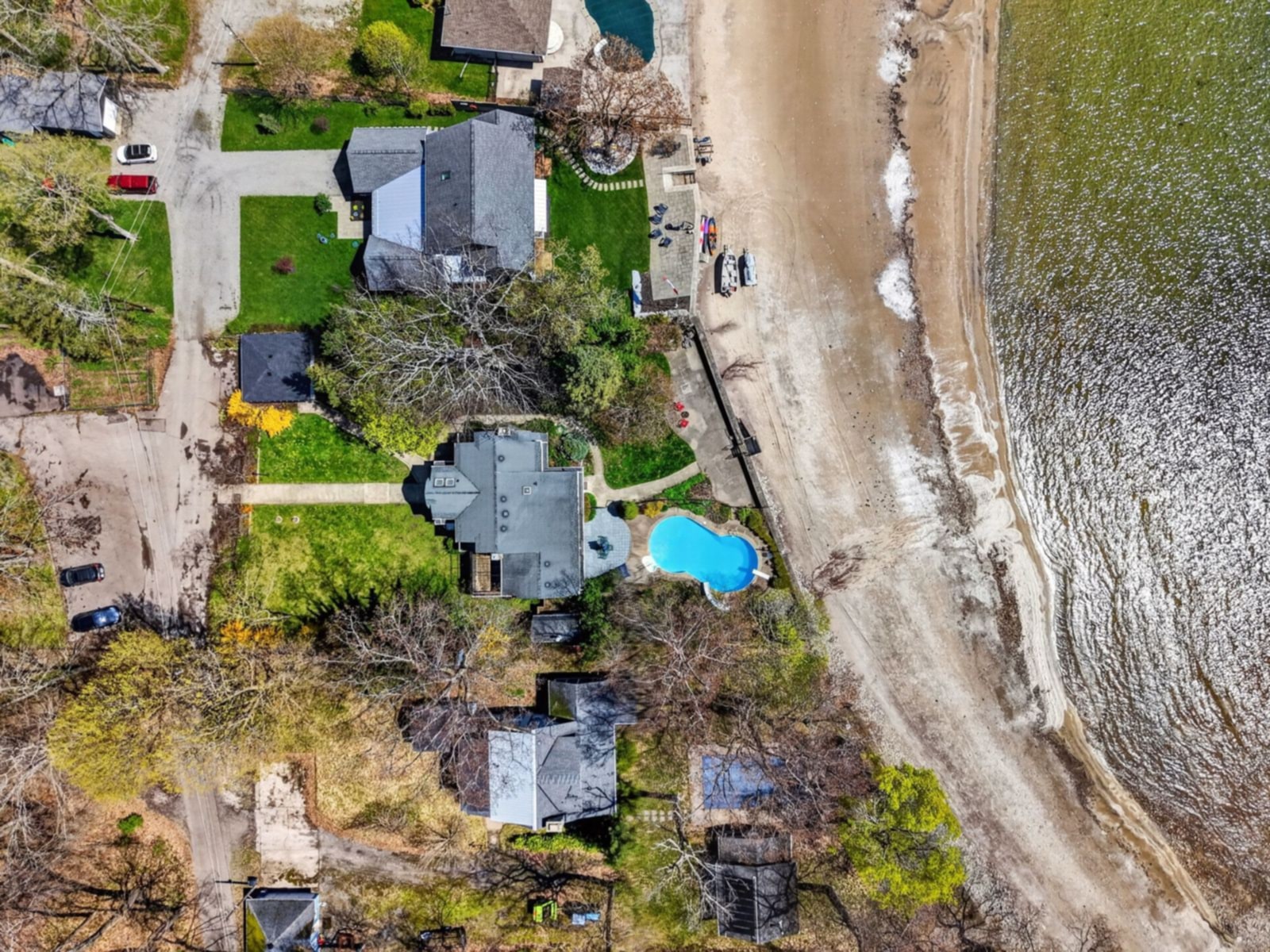
On a beach listing, aerials are about distance and context. The most useful frame is often the house, the street and the shoreline in one shot, so buyers can see it's a short walk to the sand without reading the description. Crystal Beach's grid of short streets running down toward the lake reads really well from the air, because you can count the blocks. In Port Dalhousie, an aerial that takes in the harbour, the piers and Lakeside Park tells buyers more about the neighbourhood than any paragraph could. For homes right on the water, we fly out over the lake and look back so the frontage and shoreline are obvious.
In town, the drone does a different job. It shows lot size, backyard depth, the pool, the detached garage, and what's around the house: a park behind the fence, a school down the street, a ravine or a quiet court. On a tight row of townhomes, drone may not add much at all, and we'll tell you that. More on when it earns its spot on our drone photography page.
Which lifestyle shots matter in each?
Beach listings get more lifestyle and location frames. We'll shoot the path to the beach, the view from the end of the street, two chairs on the deck facing the water, the dock if there is one, and nearby spots buyers will actually use, like the old carousel at Lakeside Park or the pier. In a reel, those shots carry the feeling of the place, and they're the ones people share.
Grimsby Beach is a good example of why. Its small, colourful cottages are part of the appeal, so a frame that shows the home among its neighbours can do more than a tight crop of the front door.
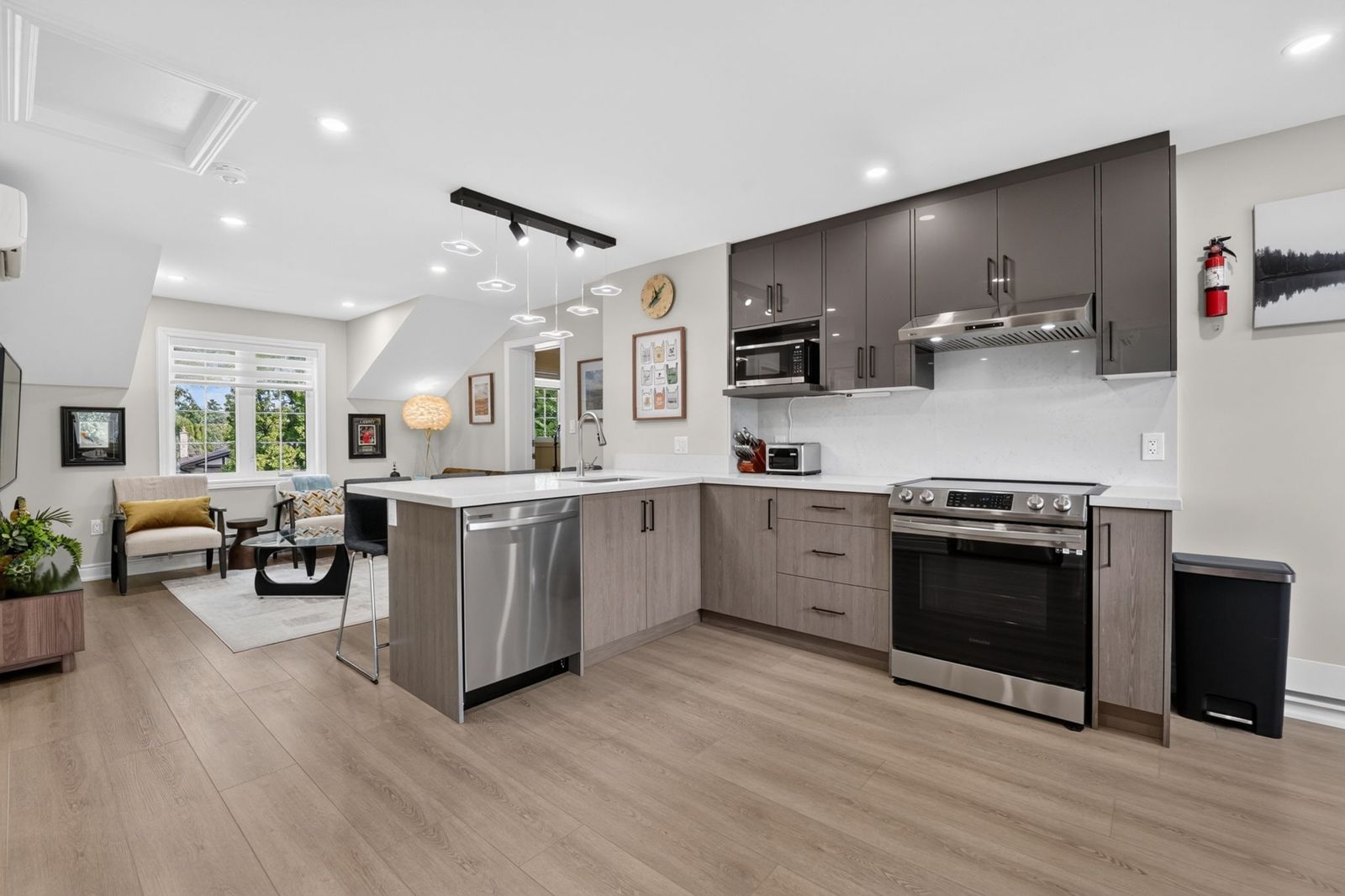
In town, lifestyle is about everyday life inside the home: a set kitchen island, the patio with furniture out, a cozy family room, a finished basement that works for kids or guests. Detail shots of finishes and upgrades pull more weight here, because buyers are holding this kitchen up against the one they saw on Saturday.
How do interiors change near the water?
Inside a beach home, the windows are often the main subject. We blend exposures so the lake stays visible through the glass while the room stays bright, and we compose the main rooms facing the view whenever we can. Older beach cottages often have quirky layouts, a bedroom added off the kitchen or a sunroom that used to be a porch, so a measured floor plan stops buyers from guessing how it all fits.
Inside an in-town home, we lean on clean, straight compositions that show room flow and size. When homes look nearly identical from the street, the floor plan lets buyers compare model to model, and our standard real estate photography approach (bright, true colour, level verticals) does the heavy lifting.
| Shoot element | Beach town listing | In-town home |
|---|---|---|
| Hero photo | House with water or shoreline in frame | Clean front exterior in good light |
| Timing | Set by which side faces the lake | Set by trees and neighbouring shade |
| Drone focus | Distance to beach, frontage, harbour | Lot size, yard, nearby parks and schools |
| Lifestyle frames | Beach path, deck view, pier, park | Kitchen, patio, family room, basement |
| Floor plan role | Explains odd, added-on layouts | Lets buyers compare similar models |
What should sellers prep differently?
Beach homes collect beach life. Sweep the sand off the porch and entry, rinse the deck, hang wet towels out of sight and clean the glass on the lake side inside and out. Kayaks and paddleboards can stay if they're stacked neatly, since they tell the story, but a pile of pool noodles doesn't. In town, the list is more about the front lawn, cars off the driveway, bins in the garage and kids' gear cleared from the yard.
Common questions
Is drone worth it for a beach town listing?
Usually, yes. On a beach listing, an aerial that shows the house and the shoreline together answers the buyer's first question, which is how close the home is to the water.
What time of day is best for Lake Ontario waterfront photos?
On Lake Ontario the water side typically faces north, so it's often in shade during the middle of the day. Late afternoon and evening in summer tend to give the lake-facing side better light.
Do in-town homes need different photos than cottages?
Yes. In-town homes are compared against similar houses nearby, so the photos focus on rooms, finishes and the yard, while cottage and beach photos focus on location and views.
Should a beach house be photographed in the off-season?
It can be. A clear, calm day in spring or fall still shows the water well, and the beach is often emptier, which makes for cleaner aerials and location shots.
Ready to book either kind of shoot? Use our booking page. It's live 24/7 and no account is needed. Not sure what the listing needs? Call or text 289-272-9503 and tell us about the house.