How We Photograph a Farm or Acreage vs a Regular House
Elijah Allison · · 7 min read
Photographing a farm, acreage or rural property is a different job from shooting a house in town. On a typical house, the home is the product and the lot is a supporting detail. On a rural property, the land, the outbuildings and the setting are often worth as much to the buyer as the house itself, so we plan the shoot around them. That changes when we shoot, how heavily we lean on the drone, how many frames go outside, and what we need from the agent before we arrive. Here's how the two kinds of shoot compare, and how to get a rural listing ready.
Key takeaways
- On rural listings the land, barns and setting carry as much weight as the house, so a bigger share of the photos goes outdoors.
- Drone moves from a nice extra to the main way buyers understand the size and shape of the property.
- Boundary details from the agent are the most useful thing we can get before a rural shoot.
- Outbuildings deserve their own photos and the same tidy-up as rooms in the house.
- Season and time of day change a farm far more than a subdivision home, so timing is worth planning.
How is a farm shoot different from a regular house shoot?
When someone buys a house in Fonthill or Welland, they're buying rooms, a yard and a neighbourhood. When someone buys a hobby farm in Wainfleet, a country home on the edge of Pelham or a property with acreage around Smithville, they're buying a way of living. They want to see the fields, the tree line, the barn, the pond, the long driveway, the gardens and how far away the nearest neighbour is.
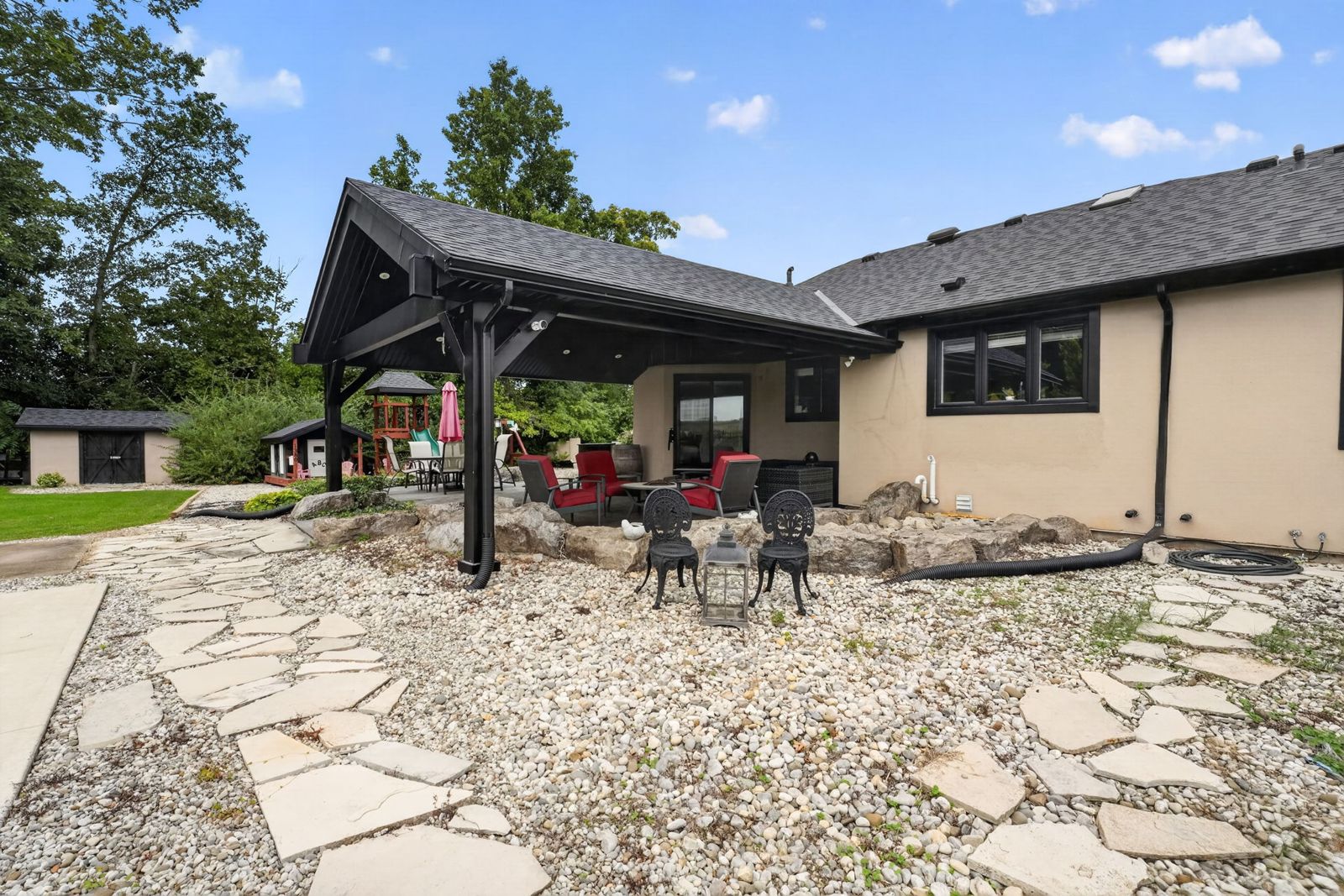
A regular house shoot spends most of its time inside. A rural shoot often splits it more evenly, and on a working farm the outdoor frames can outnumber the indoor ones. We also walk the property before we start, because on acreage the best angle is rarely the obvious one from the driveway. Before we arrive, it helps to know what the seller thinks are the best features of the land. Those become the core of the set.
| Part of the shoot | Regular house in town | Farm or acreage |
|---|---|---|
| Interior photos | Most of the set | About half, sometimes less |
| Drone | Shows the lot and the street | Shows the whole parcel, buildings and features |
| Outbuildings | A garage frame, maybe a shed | Barns, shops and sheds each get their own photos |
| Prep focus | Rooms, counters, front yard | Rooms plus lawns, equipment, barn doors and boundaries |
| Timing | Flexible most of the year | Season and light matter a lot |
Why does drone matter more on rural property?
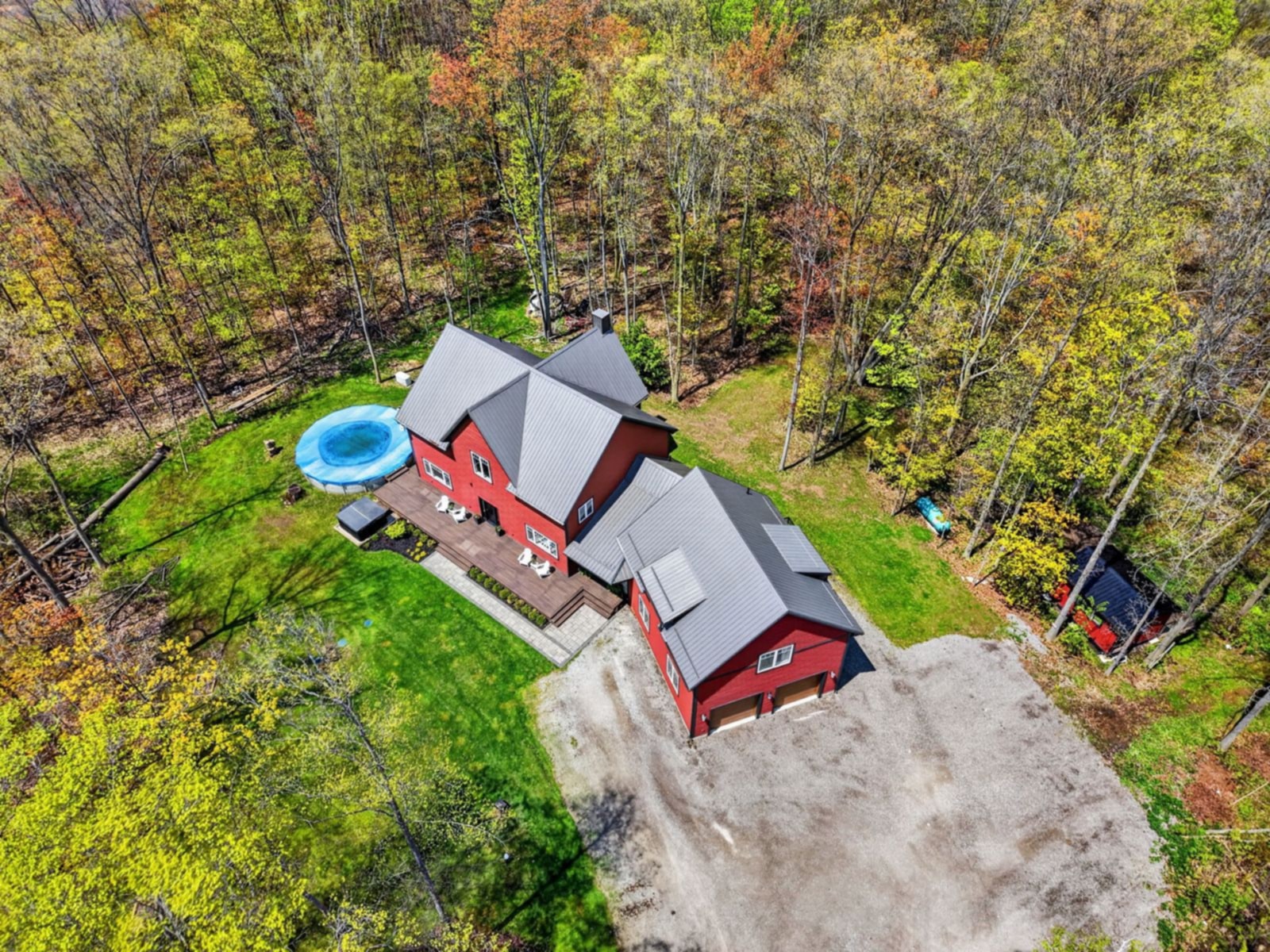
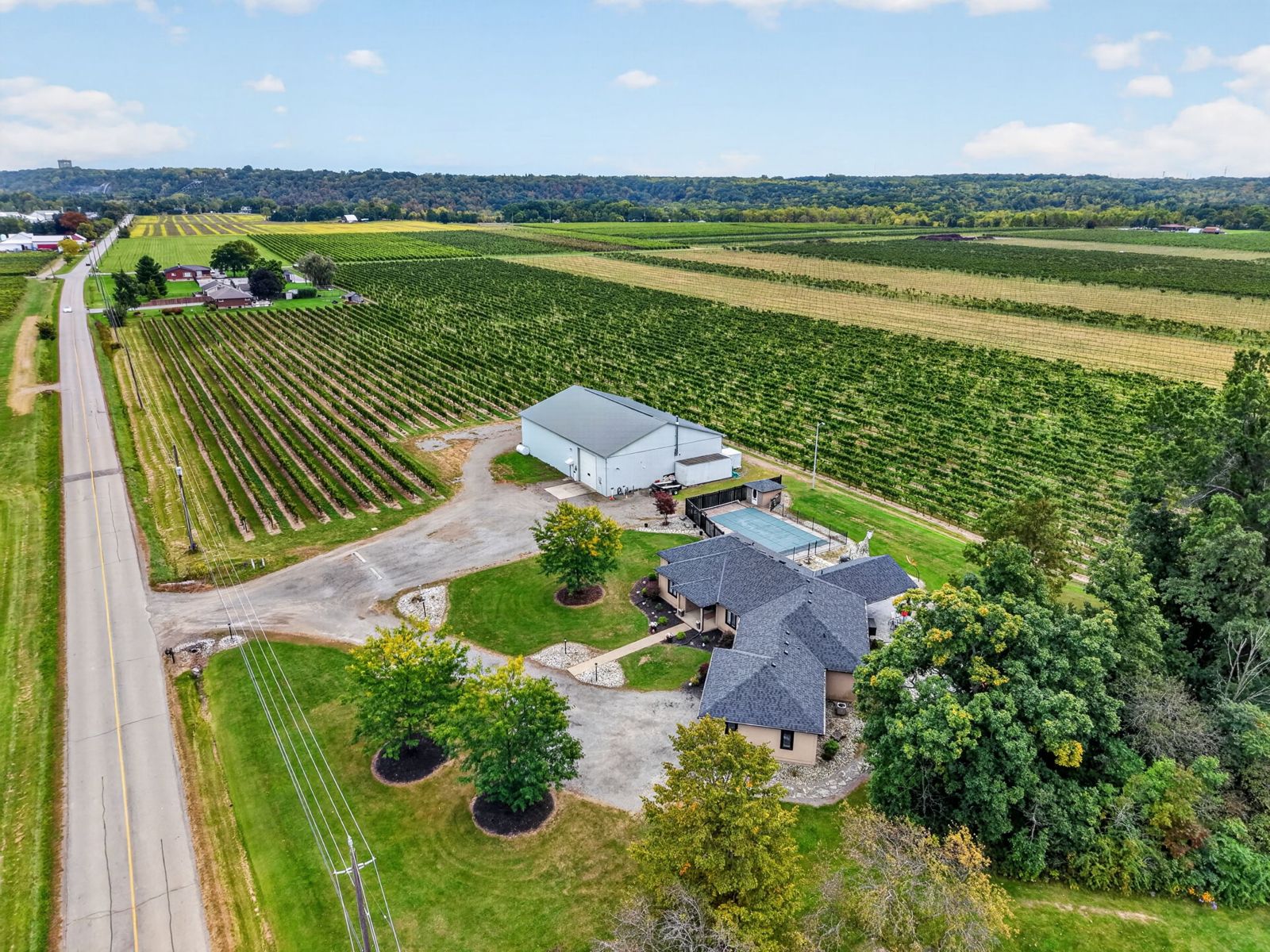
On a suburban home, drone shows the lot and the neighbourhood. On rural property, it's the only honest way to show what's being sold. A ground-level shot can't show where the land ends, how the buildings sit on it or how much of it is field versus bush.
On a rural shoot, aerials usually cover:
- A high, wide view of the whole parcel and how it sits in the landscape.
- Lower angles of the house, barn and outbuildings together, so buyers see the layout of the yard.
- The approach: the driveway, the gate and the road frontage.
- Features like ponds, orchards, vineyard rows, paddocks or a creek.
Local geography shapes those frames. Wainfleet is flat, open country, so a high aerial is the clearest way to show acreage that would just look like a long horizon from the ground. In Pelham, properties near Short Hills Provincial Park often have rolling land and heavy tree cover, so we look for angles that show the clearing, the house and the forest edge in one image. Around Smithville, parcels near Twenty Mile Creek can have a ravine or creek running through them, and buyers want to see exactly where it runs. Drone video adds even more: a slow fly-over cut into a walkthrough video or a reel gives buyers the scale of the land in a way stills can't. See our drone photography page for more examples.
What should agents send us before a rural shoot?
The single most useful thing is a sense of where the property lines are. A survey sketch, a screenshot of the parcel or even a quick note ("the line runs along the fence to the old maple, then back to the creek") lets us frame the full parcel and avoid making the neighbour's barn look like part of the listing. If corners are marked with stakes or posts, tell us where they are.
On a regular house this rarely comes up. On acreage, it's what keeps the photos honest and saves awkward questions at the showing. A few other details help us plan:
- Which outbuildings matter, and which can be skipped.
- Any livestock on site, and whether gates need to stay closed.
- Soft or muddy areas we shouldn't drive or walk across.
- Features the sellers are proud of that aren't obvious from the house, like a spring-fed pond or a back trail.
Should barns and outbuildings get their own photos?
Yes. A garage on a city lot gets one exterior frame. On a farm, the barn, workshop, drive shed, greenhouse, chicken coop or bunkie can be what sells the property to the right buyer. We shoot each building that matters from the outside, and the important ones inside too: a heated shop, a finished loft or a barn with stalls.
Ask the sellers to tidy these spaces like they would a room in the house. Equipment can stay, but parked neatly. Clear the floor, sweep up and open the big doors for light. A clean workshop looks like a feature. A cluttered one looks like a project, and buyers start pricing in the cleanup.
When is the best time to photograph a farm or acreage?
Season changes rural properties far more than city homes. Green fields, full trees, a planted garden or ripe orchard rows make the land look its best, so mid-spring through early fall is ideal when there's a choice. Fall colour in the Short Hills area can be beautiful too. If the listing has to go up in winter, a clear day after fresh snow can still look striking, especially with the house lit up.
Time of day matters as well. Low morning or evening light brings out the texture of fields and the shape of the land, while harsh midday sun can flatten it. With a big property to cover, we plan the order of the shoot so the main exterior and aerials happen when the light suits them, and the interiors fill the rest. For farmhouses with warm porch and window lighting, a twilight session makes a strong hero image that stands out among daytime listings.
How do we shoot the inside of a country home?
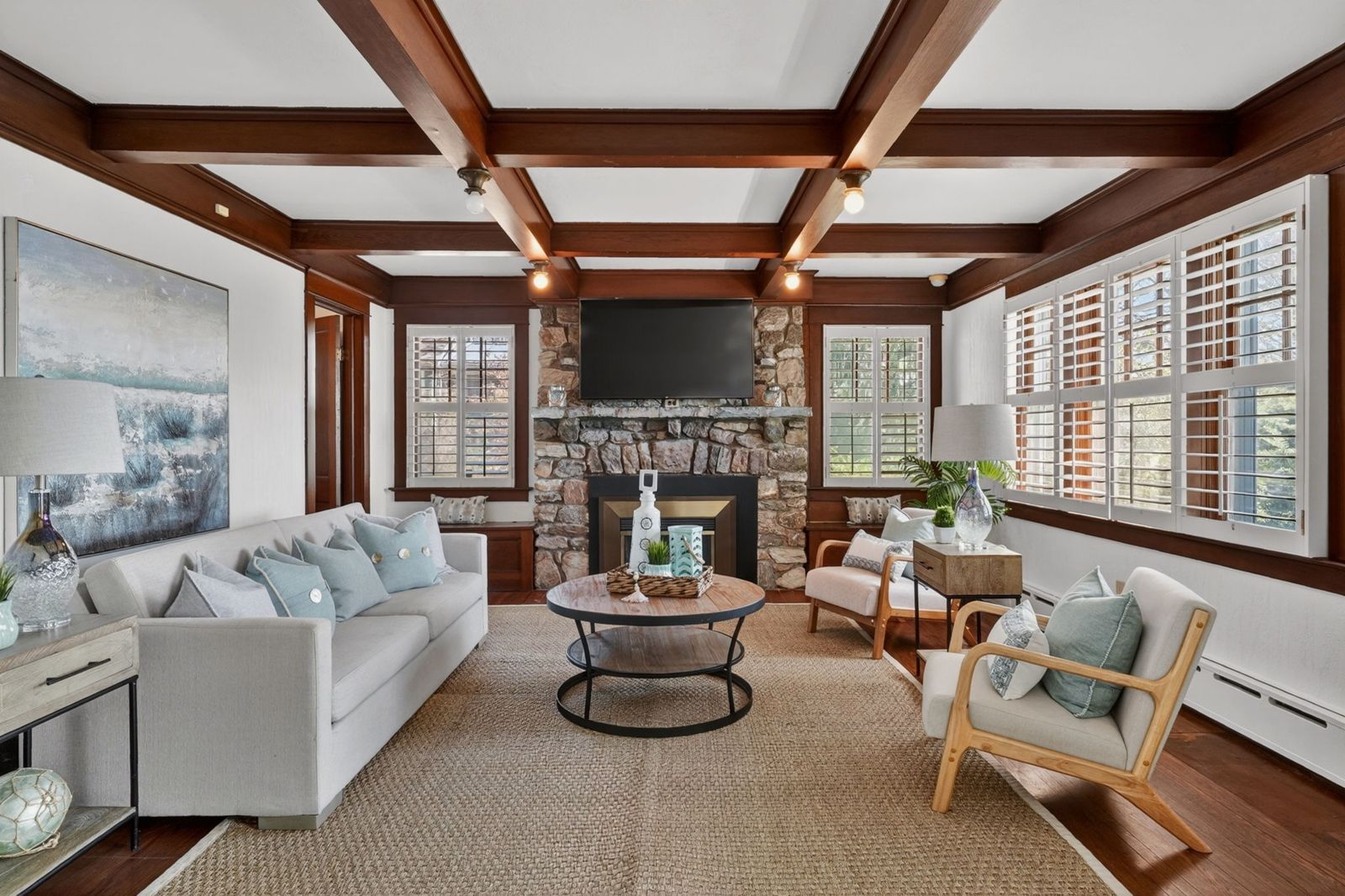
Rural homes often have features buyers love and won't find in a subdivision: wood stoves, big farmhouse kitchens, mudrooms, exposed beams and views over the fields from almost every window. We frame rooms to include those views wherever we can, because the view is part of what the buyer is paying for. A mudroom by the back door might get a full photo here when it wouldn't on a townhouse, because it tells buyers how the house works with the land.
Older farmhouses that have been added onto over the decades can be confusing to read from photos alone. A measured floor plan clears that up quickly, showing how the original house and the additions connect.
Prep list for a rural property
- Mow the lawn and the areas around the buildings a day or two ahead, so it doesn't look freshly scalped.
- Park vehicles and equipment neatly, out of the main views.
- Open barn and shop doors, and turn on the lights inside them.
- Send us boundary details and a list of the features to highlight.
- Inside, the usual: lights on, blinds open, counters clear.
Every photo is edited and colour-corrected at no extra charge, and photos come back the next business day.
Common questions
Do rural properties take longer to photograph?
Usually, yes. There's more ground to cover, more buildings to shoot and more aerial work, so we plan extra time on site for farms and acreage.
Which package suits a farm or acreage listing?
Most rural listings need drone, so the Pro Package (photos, drone, measured floor plan, plus a reel or horizontal video) is a good starting point. The Full Package adds a full walkthrough video and an iGuide 3D tour for bigger launches.
Can you show the property boundaries in the photos?
We frame aerials around the boundaries you give us, so buyers see the right parcel. Send a survey sketch or parcel screenshot before the shoot so we know where the lines are.
Is it worth waiting for spring to list a farm?
Green fields and full trees show land at its best, but a clear winter day can still look great. If the timing of the sale matters more, we'll make the most of the season you're in.
Book your rural listing
Book at our booking page, live 24/7 with no account needed, or call or text 289-272-9503 to plan a larger property with us.