Virtual Staging for Vacant Listings: When It Pays Off
Elijah Allison · · 6 min read
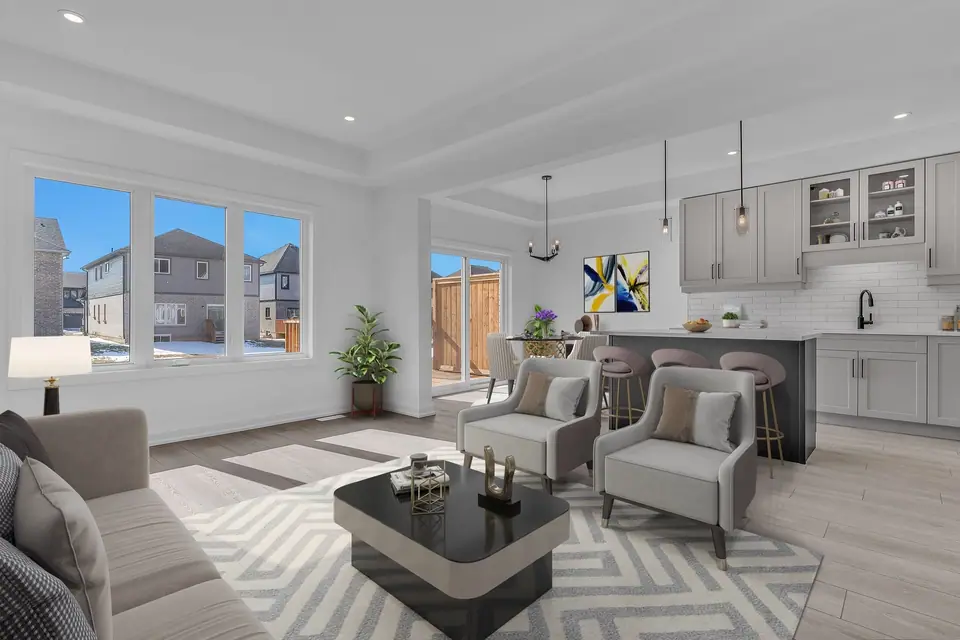
Virtual staging for vacant listings pays off when empty rooms look smaller, colder and harder to understand in photos than they do in person, which is most of the time. We digitally furnish the rooms in your real listing photos so buyers can see how they'd live there, and we can remove leftover furniture in the same edit. It isn't the right call for every listing, though. Here's how we decide when it earns its place, which rooms to stage, and how to set up the shoot so the staged images look believable.
Key takeaways
- Virtual staging gives empty rooms scale and a purpose, which is what buyers can't judge from a photo of a bare room.
- It pays off most on vacant homes, new builds, condos, small rooms and rooms with an unclear use.
- Skip it when the home is already nicely furnished or when the room's condition is the real problem.
- Two to four well-chosen rooms usually do the work; you don't need to stage the whole house.
- Every staged image is labelled as virtually staged, and you keep the original empty-room photos too.
Why do empty rooms photograph so badly?
Walk into a vacant living room and your brain fills in the gaps. You notice the ceiling height, the light, the view out the window, the way the room opens to the kitchen. A photo of the same room doesn't give buyers any of that. It's a beige box with a floor, and there's nothing in it to judge scale against.
The questions buyers' agents ask about vacant listings are nearly always the same. Is that a bedroom or a den? Will a king bed fit? Where does the TV go? Is there room for a dining table, or is it just a pass-through? Furniture answers those before anyone has to ask. That's really all staging does: it gives a room a size people can read and a job people can picture.
There's also a mood problem. Empty rooms echo, even in photos. Bare floors and blank walls read as cold, and a buyer scrolling past twenty listings in an evening tends to stop on the ones that feel like a home.
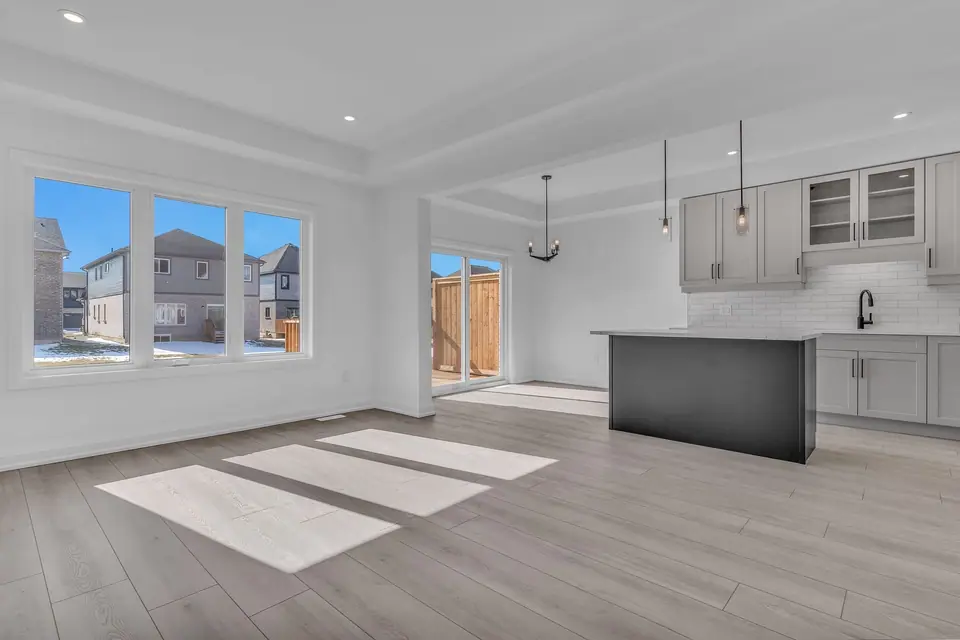
When does virtual staging pay off?
We'd recommend virtual staging most often in these situations:
- The seller has already moved out. Estate sales, relocations and investor flips often leave a home completely empty by listing day.
- New builds and renovated units. The finishes are great, but there's nothing in the rooms to show how they work together.
- Awkward or multi-purpose rooms. A room off the kitchen that could be a dining room or an office. Staging shows buyers one clear option.
- Small spaces. Condos and compact bedrooms benefit the most, because the furniture proves a usable layout fits.
- Physical staging isn't practical. Tight timelines, a budget that doesn't stretch to rented furniture, or a seller who doesn't want movers in and out. Virtual staging needs nobody on site.
- The home is half-empty. The seller has moved most things but left a few odd pieces behind. Because furniture removal is included free, we can clear what's left and stage the room properly.
When should you skip it?
Virtual staging isn't magic, and it isn't always worth adding. If the home is already furnished nicely, there's nothing to gain. If the rooms are dated or in rough shape, putting a modern sofa in front of damaged drywall doesn't change what buyers find at the showing. And if a room is mostly about its finishes (a primary bathroom, a laundry room, a mudroom) there isn't much furniture to add anyway.
We're also careful with rooms where staging could make the space look bigger than it is. Our approach is to match the furniture to the room's real light and perspective, at a realistic scale. A queen bed in a small bedroom, not a king with two oversized nightstands. The goal is helping buyers picture the space, not setting them up to be disappointed at the door.
Which rooms should you stage?
You don't need to stage the whole house. In most homes a small handful of rooms does the work, and the rest can stay as clean, bright empty-room photos.
| Room | Stage it? | Why |
|---|---|---|
| Main living room | Almost always | Usually the first interior photo buyers see |
| Primary bedroom | Almost always | Buyers want proof the bed fits with room to walk around it |
| Dining or open-concept area | Usually | Shows where the table goes and how the space divides |
| Room with an unclear purpose | Yes | Staging gives it a job: office, nursery, den |
| Secondary bedrooms and basements | If they're a selling point | Otherwise a clean empty photo is fine |
| Bathrooms, laundry, mudroom | Rarely | Finishes sell these rooms, not furniture |
After the shoot you pick the angles you want staged, and the staged images come back within 24 hours of that choice. If you're not sure which ones to pick, reach out and we'll suggest the frames that will do the most for the listing.
How do you set up the shoot for staging?
Virtual staging works best on good source photos. A few things help on shoot day:
- Clear out boxes, ladders, paint cans and stray hangers where you can. We can remove leftover items in the edit, but a clean room gives the most natural result.
- Open the blinds and turn on every light. Even, bright photos make the staged furniture sit naturally in the room.
- Tell us ahead of time which rooms you're likely to stage, so we shoot them from angles that leave space for furniture and show the room's real shape.
- Leave window coverings up if they're staying with the house. They help a staged room look finished.
Every photo is edited and colour-corrected at no extra charge, and the regular photography gallery comes back the next business day, so you can choose staging angles quickly.
What about disclosure?
Every staged image we deliver is labelled as virtually staged. You also keep the original empty-room photos from the shoot, and it's good practice to include both in the listing so buyers know exactly what they'll walk into. Check your board's rules on staged images as well. Honest staging builds trust; staging that hides problems backfires at the first showing.
Vacant homes often pair well with a measured floor plan, which gives buyers real room dimensions to plan their own furniture around. The two together answer the "will my stuff fit" question from both directions.
Common questions
Can virtual staging be added to any booking?
Yes. Virtual staging is $25 per photo, can be added to any booking, and removing existing furniture or clutter from the photo is included free.
How fast do staged photos come back?
Staged images come back within 24 hours of you picking which angles to stage. Your regular edited photos arrive the next business day after the shoot.
Do buyers know the photos are staged?
Yes. Every staged image is labelled as virtually staged, and you keep the unstaged originals to show alongside them.
Can you stage a room that still has furniture in it?
Yes. We can remove the existing furniture in the edit at no extra charge and replace it with new staging, which works well for dated or half-moved-out rooms.
How many rooms should I stage?
For most homes, two to four rooms is enough: the living room, the primary bedroom, the dining area and any room with an unclear purpose.
Got a vacant listing coming up? Add virtual staging when you book online (no account needed, live 24/7), or call or text 289-272-9503 and we'll help you choose the rooms.